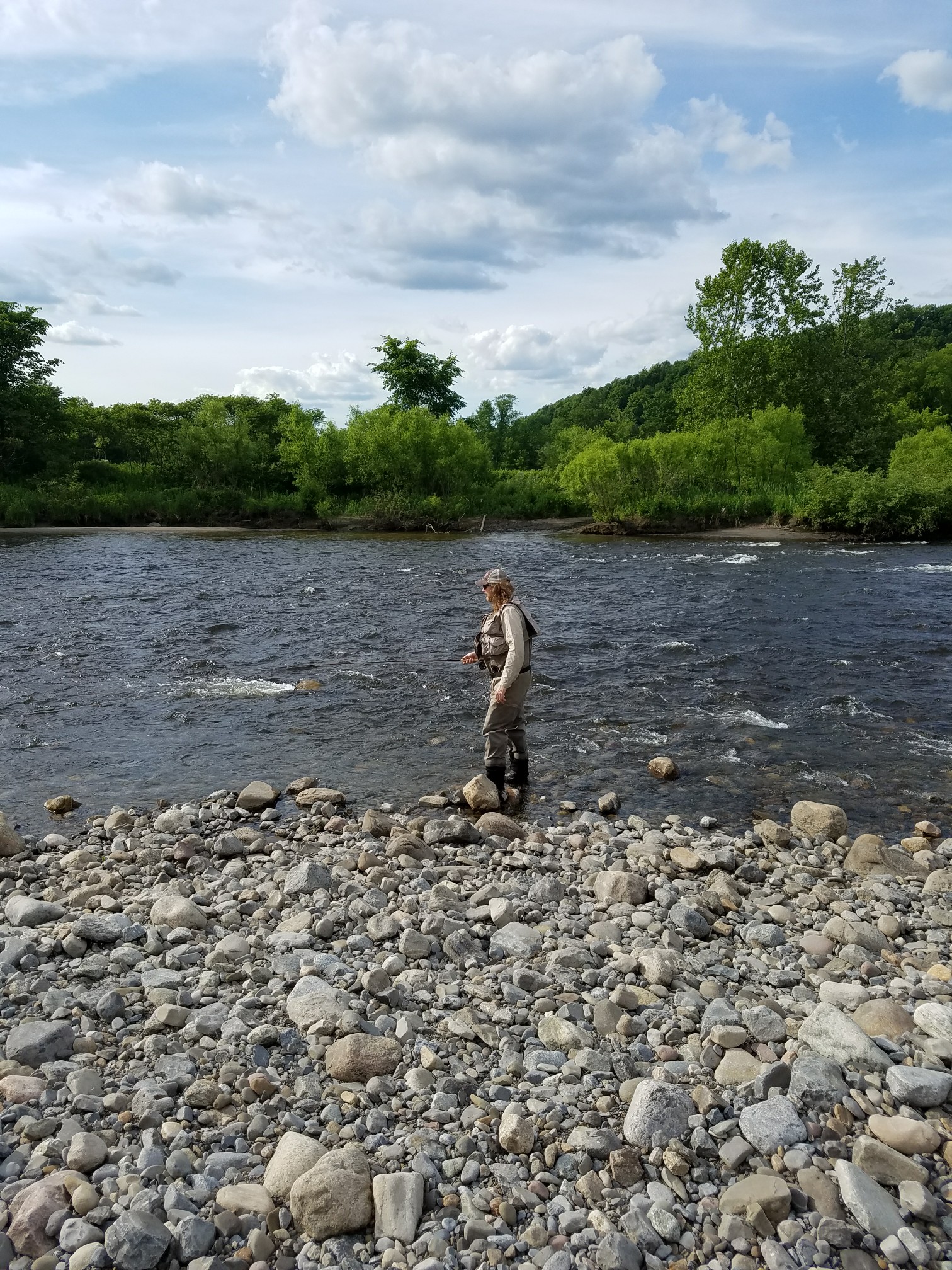
Swinging a Streamer on The West Canada Creek Photo by Wendy C.
When the water receded to 200 cfs around 5pm March 19th, I landed two beauties (one around 18″) in the trophy section using #6 black stoneflies fished at the head of a pool. Sunset was around 6:30pm.
The lower portion of the West Canada from Trenton Falls flowing south through a picturesque valley to the Mohawk River at Herkimer is one of Central New York’s premier trout streams.
It offers everything a fly-fisher could dream: deep pools, long runs, classic riffle water, large brown trout, and good aquatic insect populations. There is also a year-round fishery. Fishing with nymphs and streamers during the winter months can be a fun and sometimes productive outing on warmer days. The section from the gate at Trenton Falls to the Route 28 bridge is catch and release and only artificial lures may be used and as a result can produce some large fish, although there are large fish throughout the river.
The West Canada has good populations of stoneflies. During the winter months, fishing stonefly nymphs, wet flies, streamers or woolly buggers sizes #6 to #12 will produce fish when fished slow and deep or deep with a swinging presentation.
Hatches of caddis and mayflies start in the spring and continue throughout the summer and into the fall.
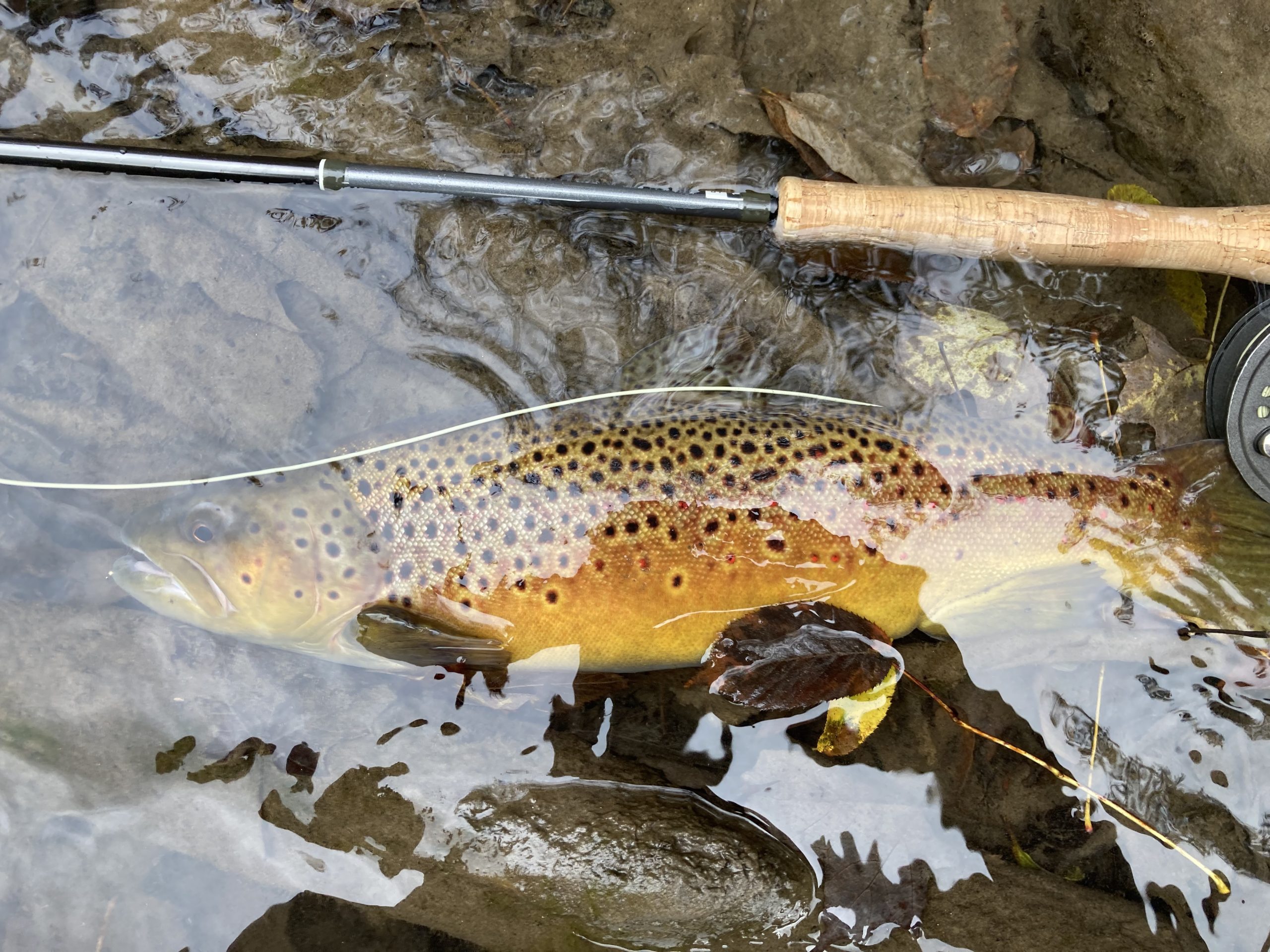
Hefty Fall West Canada Brown Trout taken by stripping a wet fly back upstream. Photo by Matt Chapple
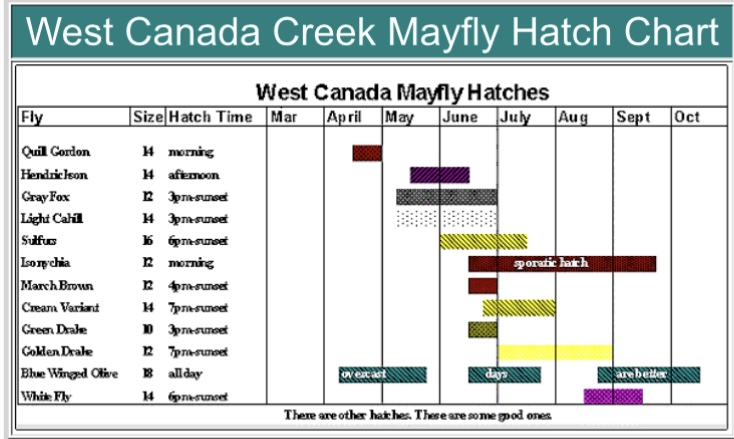
Hatches start with some Quill Gordons (Epeorus pleuralis) in April, but the hatches become heavier in May with the emergence of the Hendricksons (Ephemerella subvaria) and caddis. There are a variety of mayfly hatches and nice caddis hatches throughout the season well into the autumn, so be prepared with Elk Hair Caddis with green, tan, or gray bodies as well as Caddis emergers and pupa which are effective patterns at times when fish selectively feed on ascending caddis.
I did this hatch chart years ago. The timing of hatches and abundance may have changed over the years, but this is a general idea of what to look for.
Fishing Comparaduns and sparkle dun patterns in the slick, long pools during mayfly hatches and fishing high riding Wulff-style flies in heavy riffle water can both be productive. This is a great dry-fly river and fishing dry flies, in my opinion, is the most enjoyable way to fish for trout. I have also caught some gorgeous fish casting larger dry flies, such as a Stimulator, when fish are not rising. This is called prospecting or blind casting a dry fly, and it is really fun. Good places to blind cast a dry fly are in faster riffle water and the heads of pools and in deeper water around boulders.
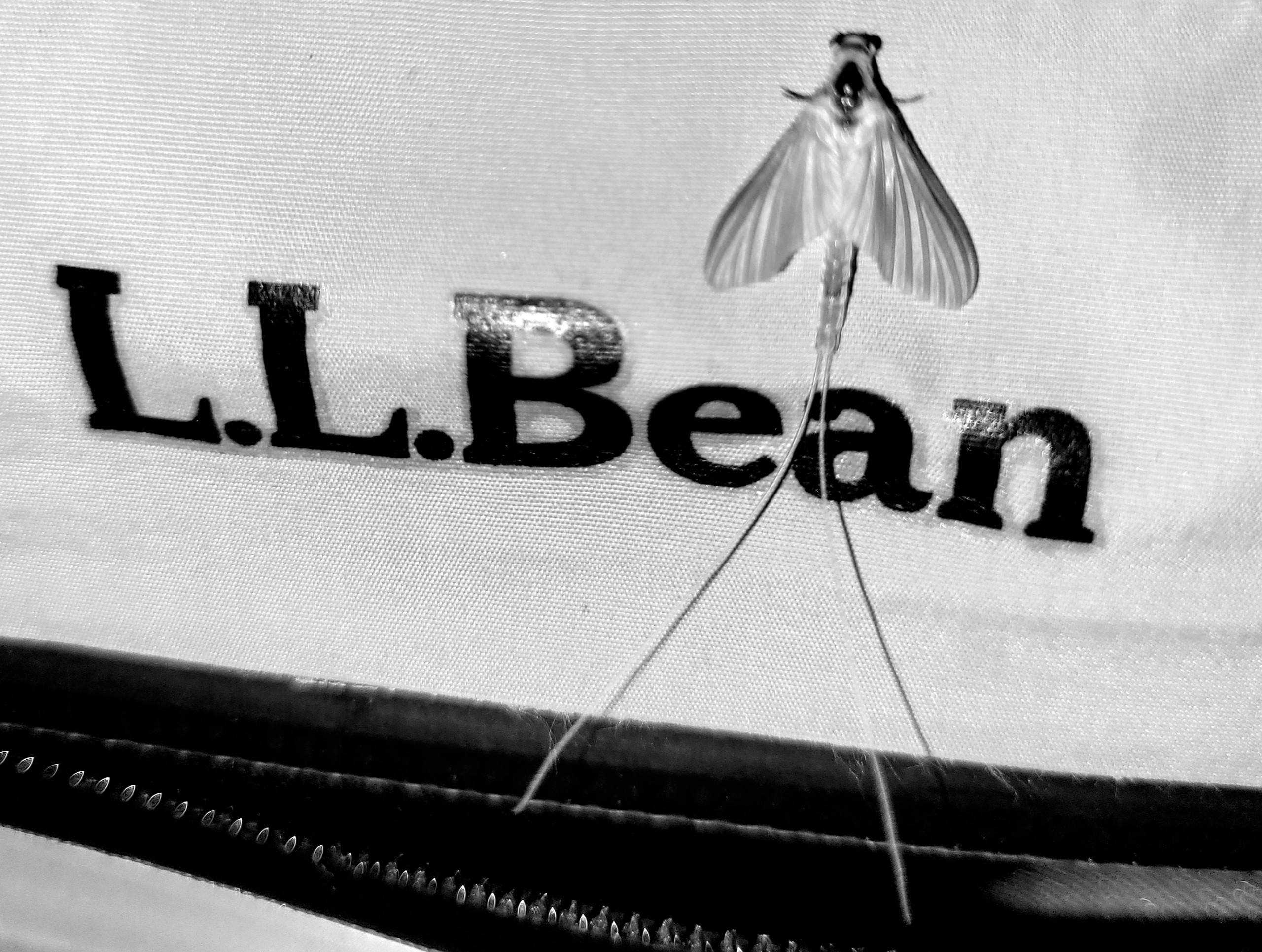
Some other exciting hatches are the Golden Drakes (Potamanthus distinctus) in July, the White Fly (Ephoron leukon) in August and September, and Blue Winged Olives in the autumn.
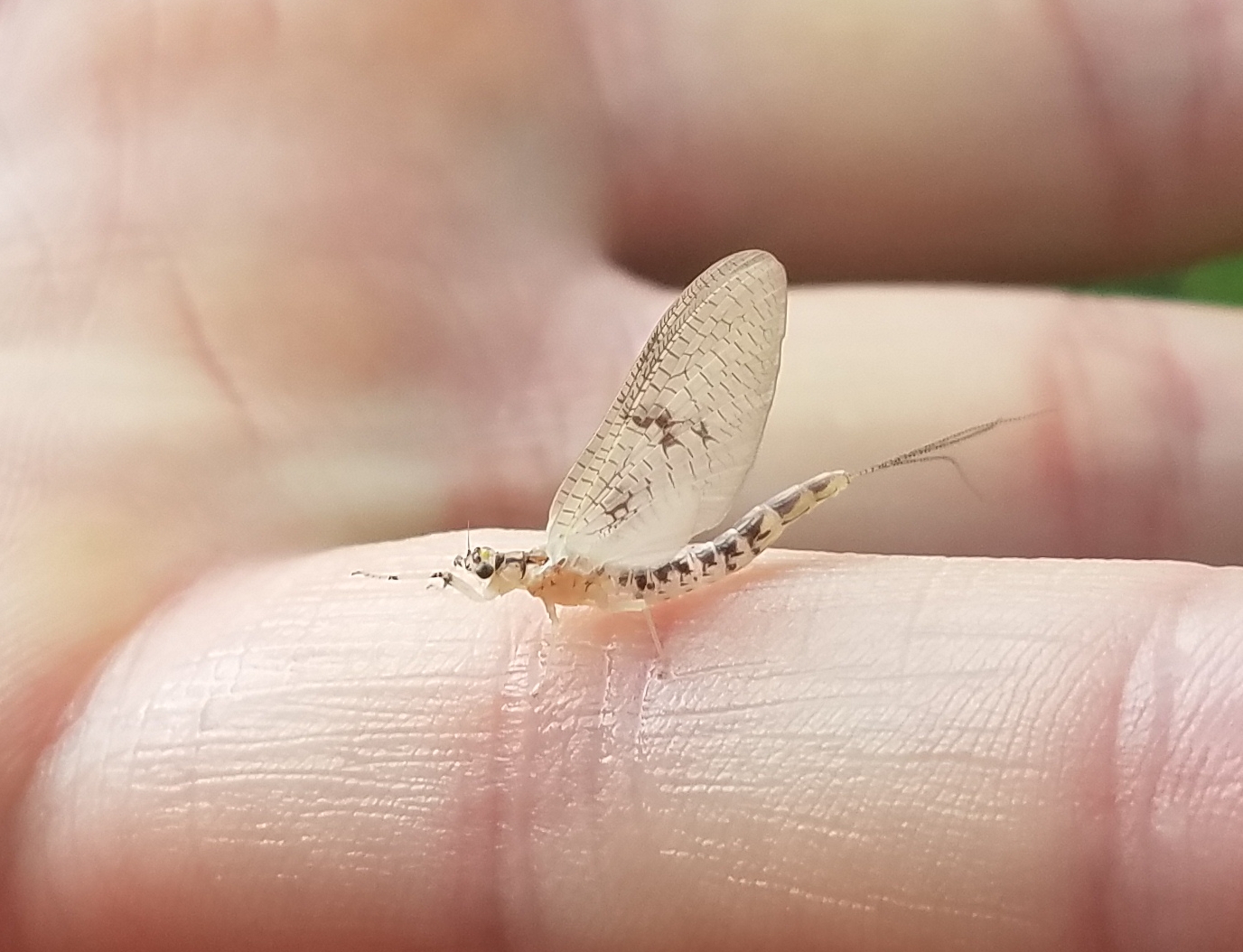
West Canada Yellow Drake During a Summer Hatch Photo by Wendy C.
When fish are not surface feeding, nymphs, wet flies and streamers can also take fish. I have taken some of my biggest fish using nymphs or wet flies on the West Canada. Prince Nymphs, Stonefly imitations, Woolly Buggers, soft hackle wet flies and streamers, with a touch of yellow or chartreuse, can be effective.
Access to the West Canada Creek is very good. Route 28 follows along the creek for the entire lower stretch and provides numerous access points. No need to stay just in the catch and release section as there are fish throughout the river and many great spots to explore. The West Canada Creek is subject to releases from the dam. A water level of 900 cubic feet per second is a nice fishable level for the stretch just below the gate at Trenton Falls, but levels from 500 to 600 are my personal favorite. Even during higher water releases, the slower sections can be productive.
One of the most fascinating hatches of the year is the white fly hatch. Photo by Wendy C.
There seems to be some misconception that the West Canada is a true tailwater type of fishery. However, the two reservoirs above the lower section of the West Canada are not deep and get warm during hot summers, and the water fed by the dams is not cold water. The West Canada suffers the same, or worse, rise in water temperatures as a freestone stream and generally shuts down by mid-July if the summer is hot. During the summer it’s important to monitor the water temperature as it will warm to above 70 degrees F during these warm spells. After a cooler summer night, water temperatures will be lowest during morning hours, and anglers can take advantage of periods of lower temperatures in the morning but should monitor water temperatures carefully.
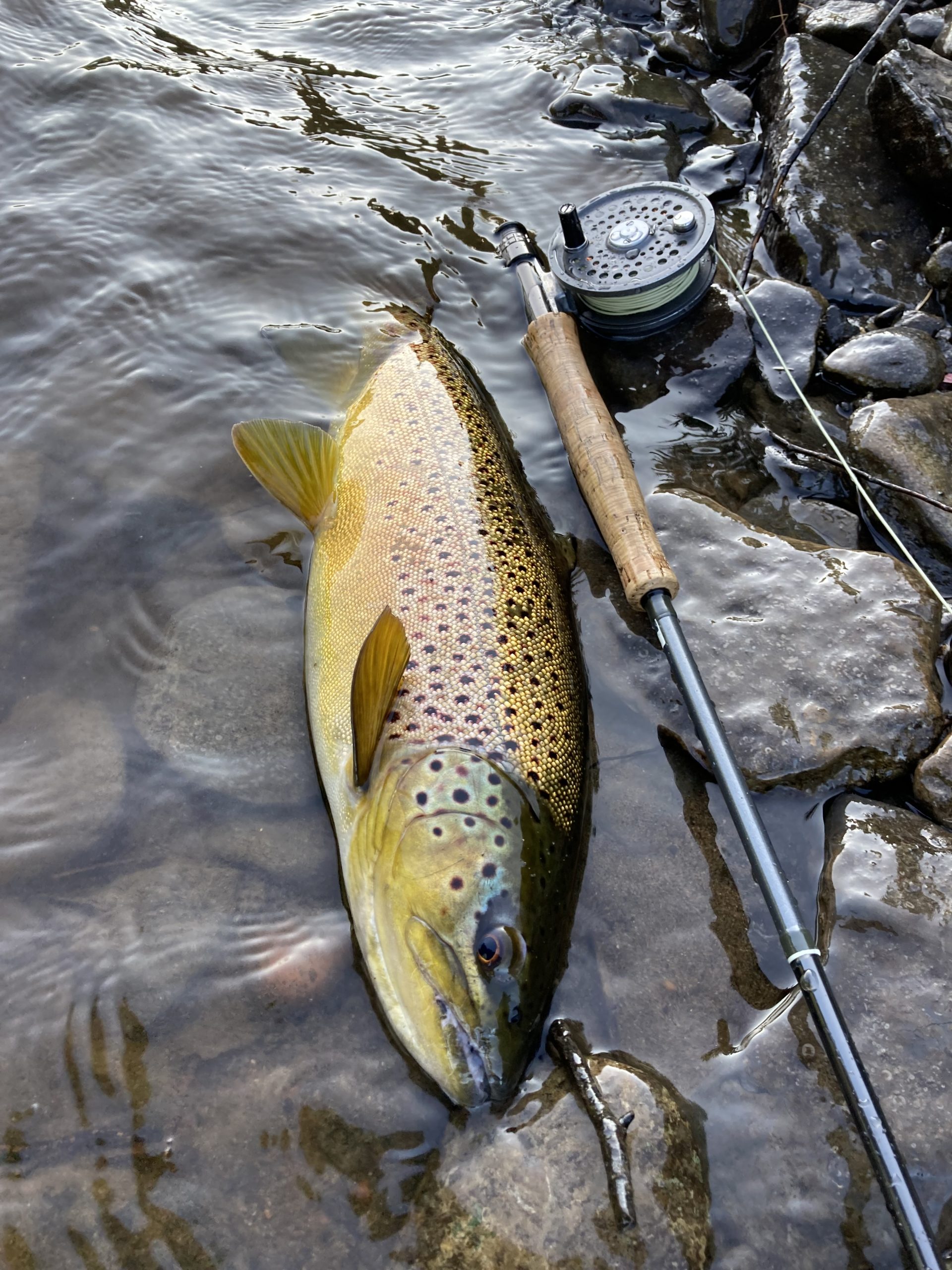
This absolutely gorgeous brown took a swinging #12 tan soft hackle wet fly in May of 2023. Photo by Matt Chapple